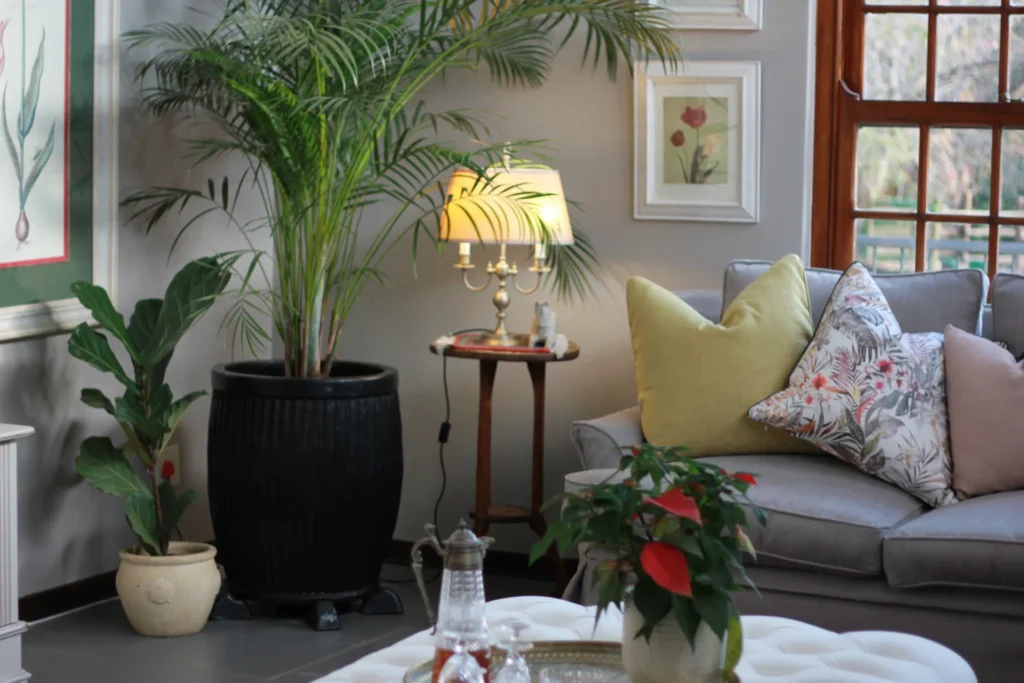
You have decided to visit Johannesburg. Now you have to choose how to stay: a boutique guesthouse, a hotel, or an Airbnb. Each can be the right answer, and each has a real downside that the booking sites tend to gloss over. This is a Johannesburg-specific comparison, built from what travellers actually report, so you can match the choice to your trip rather than to a marketing photo.
A quick way to cut through it first. Ask yourself one question: if something goes wrong at 11pm, who answers? That single test separates the three options more cleanly than price or photos do.
Hotels: consistency, at a price
Hotels are the safe default, and in Johannesburg they earn that reputation for specific reasons. You get a 24-hour front desk, on-site security, and the most reliable load-shedding backup of the three, because large hotels run generators that switch over instantly. If you arrive on a late flight or need help in the middle of the night, someone is there. The trade-offs are just as real. Hotels feel the same wherever you are, which is comforting to some and flat to others. The bill grows with parking levies, breakfast charges and resort-style add-ons that are not always obvious at booking. And per night, a hotel is usually the most expensive of the three for a comparable level of comfort. Generator noise, ironically, is a recurring complaint at the very hotels whose backup power is a selling point. Hotels suit travellers who value predictability, arrive at odd hours, or simply do not want to think about logistics.
Airbnb: flexible, but no quality floor
Airbnb can be excellent value in Johannesburg, especially when a group splits a whole house, or when you want to self-cater and come and go on your own schedule. The problems South African guests raise are consistent enough to take seriously. There is no quality floor. The experience swings wildly with the suburb and the individual host, and a great listing one street over tells you nothing about the one you booked. Security estates add friction: guest access through the gate can be a hassle, and some body corporates ban short-term letting outright, with courts upholding those bans, which has left guests stranded. Load-shedding readiness is often unclear in the listing, so you may not know whether the Fibre and lights will survive stage 6 until you are sitting in the dark. Then there is the recourse problem, the 11pm test. If something goes wrong at night, you have an app and a remote host, not a person on site. South Africa now has a short-term rental code of conduct, but it is non-binding with no real enforcement. Documented scams add to the risk, from fake listings taking deposits to a hijacked listing during a major event. The fee stack also erodes the value: cleaning fees plus a service fee of around 14 percent can pull an Airbnb level with, or above, a guesthouse once you add it all up. Airbnb suits self-sufficient travellers and groups who have vetted the listing carefully and do not need anyone on hand.
Boutique guesthouses: the middle path
A boutique guesthouse sits between the two. You get character and a personal touch that hotels rarely match, a cooked breakfast, and an accountable host who is on site or a phone call away. Prices typically come in below a comparable hotel. For the 11pm test, a guesthouse passes where Airbnb often fails: there is a real person whose name you know. The honest downsides. Load-shedding readiness varies from one guesthouse to the next, from properties that have done nothing to those running big, noisy generators, so it is worth asking directly before you book. Many guesthouses do not staff a 24-hour front desk, so check-in usually happens within set hours rather than whenever you land. And you get fewer facilities than a full hotel: no gym, room service or conference floor. Guesthouses suit travellers who want comfort and a human point of contact without hotel prices or hotel anonymity.
The comparison at a glance
| Boutique guesthouse | Hotel | Airbnb | |
|---|---|---|---|
| Personal service | High | Low to medium | Variable |
| Someone on hand at night | Usually | Always | Rarely |
| Load-shedding backup | Varies, ask first | Most reliable | Often unclear |
| Breakfast | Usually included | Often extra | Self-catered |
| Price per night | Mid | Highest | Lowest for groups |
| Consistency | Medium | Highest | Lowest |
| Best for | Comfort plus a real host | Predictability, late arrivals | Self-sufficient groups |
The Johannesburg safety angle
Whichever you choose, Johannesburg rewards a few habits. The city is car-dependent, so plan to drive or use Uber rather than walk between places, particularly at night and around transport hubs. Crime can rise during load-shedding after dark, which is why reliable backup power reads as a safety feature here, not just a comfort one. A rough ladder emerges from traveller reports: a hotel offers the most built-in security, an established guesthouse with an on-site host comes next, and an unvetted Airbnb carries the most uncertainty. The suburb you pick matters as much as the type of place.
Where this leaves you
If you want round-the-clock staff and arrive at all hours, book a hotel. If you are a group renting a whole house and you have checked the listing and the estate rules, an Airbnb can be great value. If you want character, a cooked breakfast and a real person who answers when it matters, without paying hotel rates, a boutique guesthouse is the middle path. Pytchley House is built for that middle: a small boutique guesthouse in Bryanston with hosts on hand, three en-suite air-conditioned rooms, solar and inverter backup, secure on-site parking, an outdoor pool, and deep-sleep Kooi mattresses. There is a cooked-to-order breakfast from 07:00 to 09:30, fast Fibre and work desks, and airport and meeting transfers. With only three rooms, the host actually knows who is staying. If a personal, accountable stay is what you are after, it answers the 11pm test by design. See availability here.
Common questions
Is a guesthouse better than a hotel in Johannesburg?
It depends on the trip. Guesthouses give more personal service and usually cost less, but hotels offer 24-hour staff and the most reliable load-shedding backup. For comfort with a real host at a lower price, a guesthouse wins.
Is Airbnb safe in Johannesburg?
It can be, but there is no quality floor, security-estate access can be difficult, and there is little recourse at night since the host is remote. Vet the listing and the suburb carefully, and check the load-shedding setup before booking.
Which is cheapest?
Airbnb is usually cheapest for groups splitting a whole house, though cleaning and service fees narrow the gap. Guesthouses are typically cheaper than comparable hotels for individuals and couples.
What is the safest type of accommodation in Johannesburg?
Hotels offer the most built-in security, followed by established guesthouses with an on-site host. The suburb matters as much as the accommodation type.